
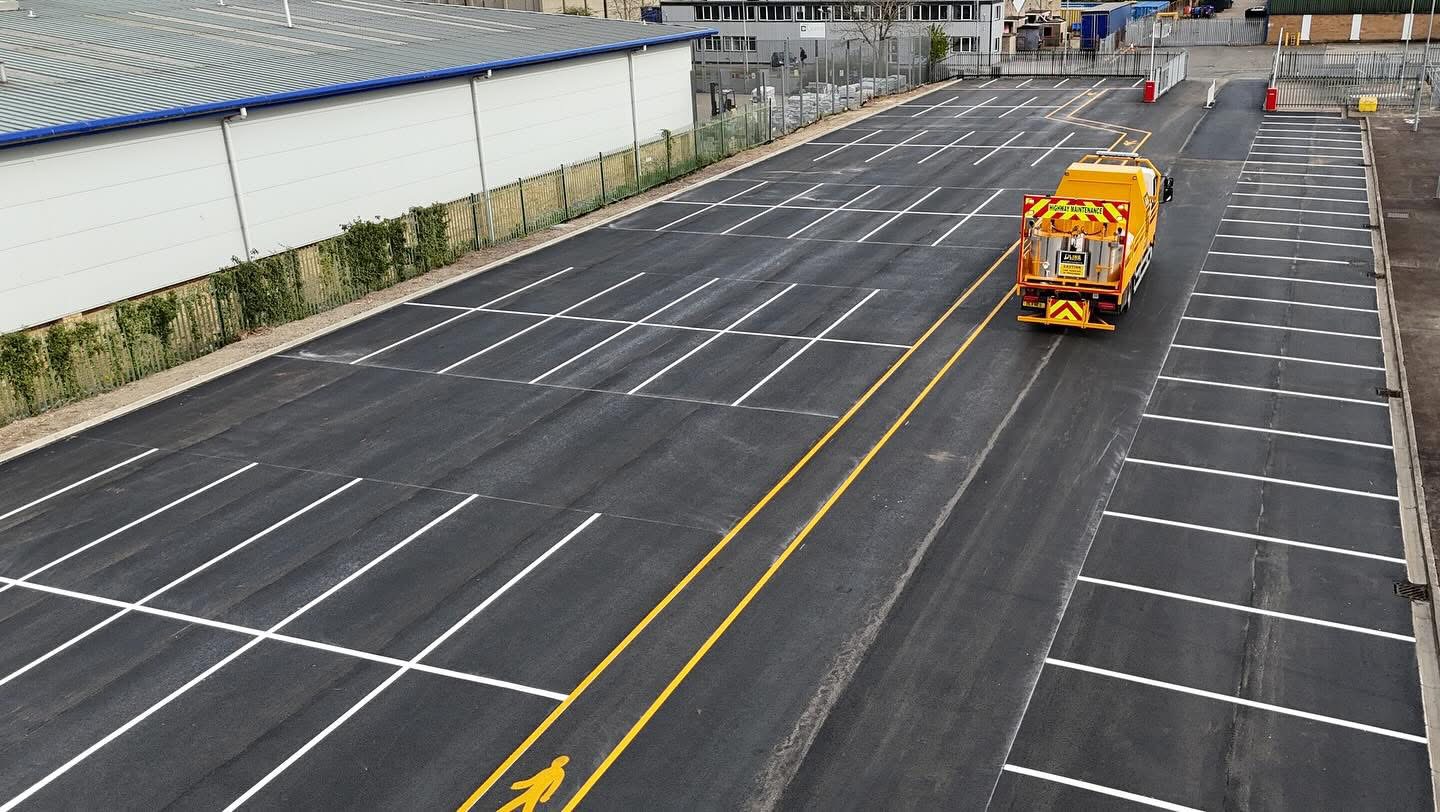
Car Park Road Markings: Sizes, Regulations & Best Practice
Clear, compliant car park markings are essential for safety, organisation and legal compliance. In 2026, businesses, schools, local authorities and property managers are expected to follow updated UK guidance on bay sizes, layouts and accessibility.
At D Line Markings Ltd, we specialise in professional car park line marking solutions that meet current UK standards while delivering durable, high-visibility results.
Why Car Park Road Markings Are Important
Well-designed and correctly installed car park markings:
- Improve vehicle and pedestrian safety
- Maximise usable parking space
- Reduce traffic confusion and accidents
- Ensure compliance with UK regulations and accessibility guidance
- Present a professional, well-maintained site
Faded, incorrect or poorly laid markings can lead to complaints, enforcement issues and unnecessary risk.
UK Regulations & Guidance
Car park road markings in the UK are guided by:
- Traffic Signs Regulations and General Directions (TSRGD) 2016 (as amended)
- Local authority and site-specific requirements
- British Parking Association (BPA) best practice
- Accessibility guidance under the Equality Act 2010
While private car parks are not always enforced in the same way as public highways, compliance with recognised standards is strongly recommended and often required by insurers, councils and managing agents.
Standard Car Park Marking Sizes
Standard Parking Bays
- Length: 4.8 – 5.0 metres
- Width: 2.4 – 2.5 metres
- Line width: Typically 100mm
It is advised with the vehicle sizes in 2026 that sites aim to have bays on the 5m x 2.5m to ensure that vehicles can fit in the spaces and have a little space to get in and out.
Disabled Parking Bays
- Length: 4.8 – 5.0 metres
- Total width: 3.6 – 4.2 metres (including access aisle)
- Colour: Yellow
- Location: Close to entrances with clear pedestrian routes
Parent & Child Bays
- Length: 4.8 – 5.0 metres
- Width: Typically 3.2 – 3.6 metres
- Colour: White
- Clearly signed
Electric Vehicle Bays
- Length: 4.8 - 5.0 meters
- Width: 2.4 - 2.6 meters
- Colour: Colour can be site specific and to customer request as no set colour or design
It is advised that if space is available that they bay size is 5.0m x 2.6m to allow access down the side of the vehicle with heavy charger cables and safely access the charger port.
Pedestrian Walkways & Crossings
- Minimum width: 1.2 – 1.5 metres
- Marked using dashed lines or zebra-style crossings
- Designed to guide pedestrians safely across vehicle routes
Directional Arrows
- Arrow length: 2.0 – 4.0 metres
- Used to manage one-way systems and improve traffic flow
Colours & Materials Used
Marking Colours
- White – Standard Bays & Arrows
- Yellow – No Parking Areas, Hazards & Disabled Bays
- Red or bespoke colours – site-specific requirements
Materials We Use
- Thermoplastic road markings
- Single Epoxy Paint
- Acrylic Paint
- MMA
- Anti-skid and high-friction surfaces
Accessibility & Compliance
Under the Equality Act, car park operators must make reasonable adjustments for disabled users. This includes:
- Correct bay sizing
- Clear symbols and signage
- Safe pedestrian access routes
- Ongoing maintenance
- It is advised by British Parking Association (BPA) that around 6% of the car park is allocated to disabled
We help clients exceed minimum requirements and future-proof their car parks.
Common Car Park Marking Mistakes
- Bays that are too narrow
- Poor contrast or faded markings
- Confusing traffic layouts
- Inadequate disabled or pedestrian provision
- Incorrect road width between bays a minimum 6 meter road way is needed
Why Choose D Line Markings Ltd?
✔ Experienced road marking specialists
✔ Fully compliant with 2026 guidance
✔ Durable, professional finishes
✔ Commercial, industrial & public sector projects
✔ Minimal disruption to your site
Need Car Park Line Marking?
If you’re planning a new layout or refreshing existing markings, D Line Markings Ltd can help with expert advice and high-quality installation.